How to Learn Piano: A Beginner's Step-by-Step Plan
How to Learn Piano: A Beginner's Step-by-Step Plan

To understand how to learn piano, begin with a place you can use regularly, then build two connected tracks: keyboard orientation, comfortable movement and steady pulse; alongside small amounts of reading, chords and listening. Bring those skills together in short music you can finish.
This source-informed roadmap is for teenage and adult complete beginners, including anyone wondering how to learn piano at home. Its examples are illustrative, not personal learning results. The four weeks are adjustable stages, not deadlines: repeat, shorten or extend them as needed.
Set Up a Place Where You Can Practice Regularly
An acoustic piano, digital piano or keyboard can provide a starting place if its keys work reliably and its range meets your chosen beginner material. Agree on household sound arrangements for an acoustic instrument; check power and headphone support for an electronic one.
Use stable placement and a seat height that allows comfortable access to the keys, with room for your legs. Keep cables away from your feet and your next practice material within reach. Reduce setup friction before expanding your equipment.

Learn the First Skills in a Useful Order
Use this Two-Track Beginner Map to choose your next task:
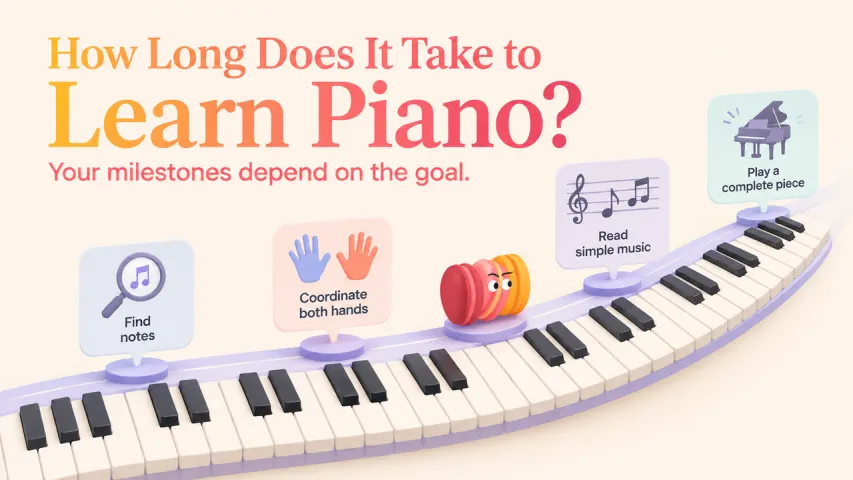
- Track A: orientation and timing. Recognize keyboard landmarks, move comfortably between nearby keys and maintain a steady pulse.
- Track B: musical connections. Read a little notation, explore a manageable chord shape and copy a short pattern by ear.
Neither track outranks the other. This map organizes your practice; it is not a universal teaching sequence. Adjust the balance with your teacher or method, then connect both tracks in short music.
Keyboard Geography and Comfortable Movement
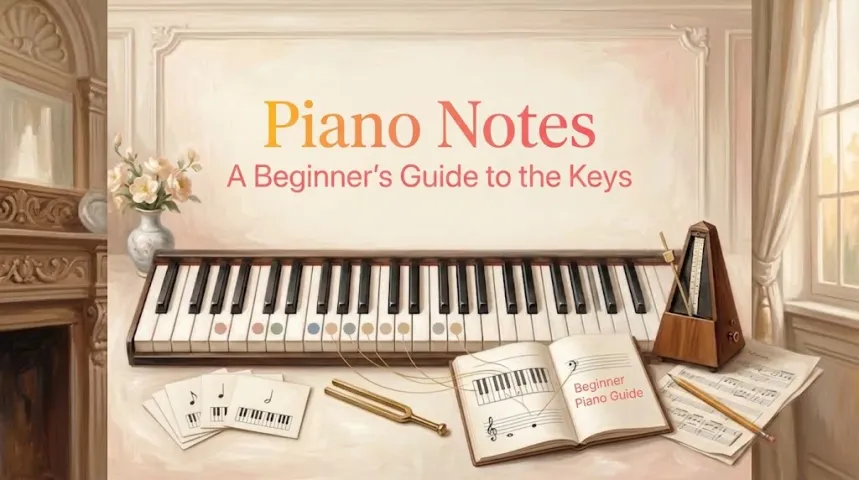
Find the recurring groups of two and three black keys. Locate C immediately to the left of a two-black-key group, then find another C elsewhere. Hear how moving right raises pitch and moving left lowers it.
Begin within an easy reach. Notice gripping or uncomfortable stretching rather than forcing your hand to match a photograph. Ask a teacher about uncertain movement. A useful orientation check is finding the same starting key after taking your hand away.
Rhythm Before Speed
Count or tap an even pulse before adding keys. With a metronome, first establish which note value each click represents. Choose a pace that leaves room to listen. If counting and playing compete, tap the rhythm first. ABRSM practice guidance illustrates small goals, slow even playing, tempo records and reflection; it does not validate this four-week plan.
Play–Notice–Narrow–Replay is a practical memory aid: play your chosen short section, identify one audible problem, isolate its transition or one hand, then replay the original section and compare that problem. Slow down when needed; compare attempts under the same conditions before claiming improvement.
Reading, Chords, and Playing by Ear
Reading helps you revisit written music; chord shapes connect notes that sound together; listening reveals rising, falling and repeated patterns. Learning how to play piano can involve all three in small doses.
Read a few notes from suitable beginner material, listen to the phrase, then explore an accompaniment introduced by your teacher or method. If combining tasks feels crowded, separate one part and reconnect it later.

Follow a Four-Week Beginner Plan
Treat each week as a stage you can revisit. The next-evidence checks help you decide whether to continue or repeat.
- Week 1: map keys and pulse. Find black-key groups, relocate a starting note and tap evenly. Next evidence: you can find that note again and play several deliberate sounds against a steady count. Repeat if locating keys interrupts every attempt.
- Week 2: explore each hand. Play short right-hand and left-hand patterns separately before trying a small coordinated section. Next evidence: each hand can repeat its part with recognizable timing. Stay here if combining them obscures both parts.
- Week 3: connect the tracks. Link a small reading task, a chord shape and a pattern heard by ear through the same music. Next evidence: you can explain one connection and hear it while playing. Reduce the amount or repeat the stage if the connection remains unclear.
- Week 4: complete and review. Work toward a coherent version of one short piece or section at a comfortable pace. Next evidence: you can carry its musical shape through and identify one difficulty worth revisiting. Extend this stage whenever needed.
The planning surface below is a conceptual editorial illustration, not a verified app screen. Its repeat option matters as much as its continue option.

Choose Music That Is Easy Enough to Finish
Choose a short piece with few simultaneous demands and one manageable stretch, such as a new rhythm or small position change. If every section introduces another obstacle, select an easier arrangement or shorter section.
For this plan, finish means playing your agreed version from start to end, preserving its pulse and rests without restarting at every slip. It need not be error-free: identify the next issue afterward. When deciding how to learn to play piano, distinguish repairing one connection from checking the whole section.
Combine Lessons With Independent Practice
A lesson gives your independent work a direction. Use this lesson-to-practice handoff:
- Capture one correction in your own words.
- Define one audible or visible check, such as keeping the count steady through a change.
- Apply the practice loop to that section, then compare the original passage.
- Bring back one precise question about what still happens.
Hypothetical example: Two bars, quarter note = 60 BPM; the left hand enters late in bar two. Isolate the bar-line transition, try the left hand alone, then combine hands slowly. Replay both bars at the original tempo: the entry is still late once. Ask the teacher what to change at that entry. These invented details demonstrate recording, not a recommended tempo or measured result.
Berklee's Keyboard Method connects technique, reading and chords with musical application. It requires prior instrumental experience, so it illustrates connected study rather than serving as a course recommendation for complete beginners.

Use a Personal AI to Keep the Plan Realistic
A personal AI such as Macaron can serve as a neutral planning or logging example. Supply your chosen piece, available days, preferred time, friction and next check.
An illustrative record: “Piece: my beginner melody. Days: Tuesday and Saturday. Time: before dinner. Friction: setting up the stand. Next check: count through the opening.” Add your own weekly reflection.
Correct inaccurate summaries and inspect privacy and deletion controls before sharing personal details. Keep your own notes. The record organizes your choices; a teacher provides musical assessment and technique feedback.
Notice When Technique Needs Human Feedback
Ask a qualified teacher about recurring tension, uncertain movement, repeated rhythm breakdown or errors you cannot explain. Identify the exact section and what changes between attempts.
Do not push through physical symptoms or repeat a painful movement to document it. Persistent pain, numbness, tingling or previous-injury concerns warrant an appropriate medical professional; teacher approval is not a prerequisite. Johns Hopkins' performing-arts rehabilitation service provides specialized assessment for musicians. This roadmap gives general guidance, not diagnosis or treatment.
FAQ
Can family members share one online piano course account?
Only if the current license permits it. Ask whether household access includes separate profiles and whether one learner can overwrite another's progress. Profiles do not necessarily authorize shared credentials. If the rules are unstated, permission is unknown; obtain the provider's answer before sharing.
Are piano lesson videos available with captions or transcripts?
Coverage varies by service and video. Before paying, inspect an actual lesson player and its accessibility information. Check whether captions render note names and rhythm terms accurately, and whether a transcript is available. If coverage is unstated, it is unknown; do not assume every lesson matches the sample.
Do course refunds cover accidental annual subscription renewals?
Cancellation and refunds are separate. FTC trial guidance supports checking trial length, charges and cancellation terms. Identify the billing merchant and purchase channel; retain your receipt and cancellation confirmation. Accidental-renewal refunds depend on the current contract, payment platform and applicable rules. Check that channel's refund process promptly; no refund is guaranteed.
Can renters safely use acoustic pianos in shared buildings?
Check the lease and practice hours separately from the moving route, floor suitability and placement. Confirm these with the landlord and relevant professionals, including professional movers. Yamaha sound guidance distinguishes airborne sound from structure-borne vibration; sound precautions cannot establish an unspecified floor's safety.
What happens to saved progress after a course closes?
Check shutdown terms, export options and download licenses. Ask whether exports include teacher feedback and whether downloaded files still require login. Keep your own learning notes. If post-closure access is undisclosed, it is unknown; saved progress does not promise permanent access. These policy answers are general information, not legal advice.
Conclusion
If you are deciding how to start learning piano, make the space usable, connect the two tracks and let observable progress guide each stage. As you learn how to play piano, aim for music you can understand and finish, with a clear question ready when you need help.
Previous Posts