How Long Does It Take to Learn Piano?
How Long Does It Take to Learn Piano?

The Short Answer Starts With Your Definition of Learn
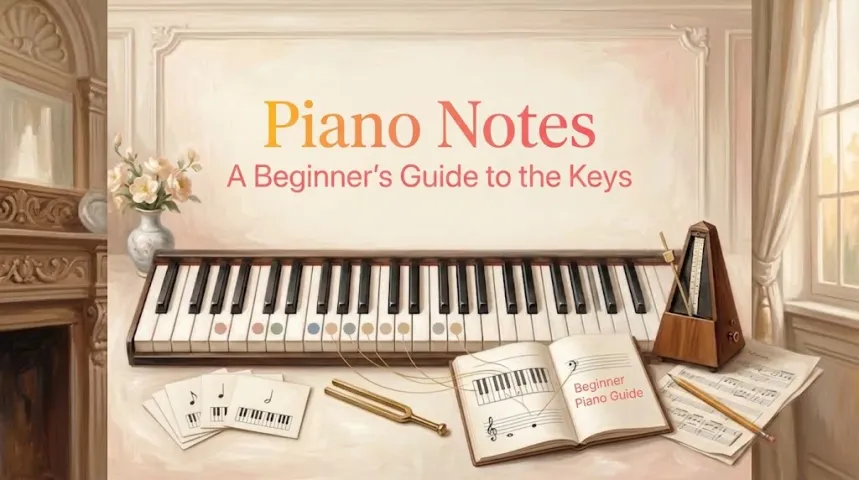
A recognizable melody, a complete two-hand piece, and independent score reading are different meanings of “learn piano.” So, how long does it take to learn piano? For adult and teenage beginners planning five focused 20-minute sessions weekly with monthly teacher feedback, consider several sessions to a few weeks for a tiny, limited-range melody; several months for an approachable two-hand piece; and a year to several years for independent intermediate work. These are editorial planning bands, not guarantees or population averages, synthesized from curriculum scope and those practice assumptions. Your repertoire, coordination, reading demands and actual progress can move them substantially.
Choose a Piano Milestone That Matters to You
The Piano Milestone Staircase is: recognizable one-hand melody → coordinated two-hand piece → independent score-to-performance work. Each step names something you can demonstrate, rather than a label you must earn.
Play a Simple Melody
Choose a short tune within a small note range. The milestone is a recognizable melody with a reasonably continuous pulse. You need not read fluently, memorize it or match a professional recording. A simplified melody still counts when that is the goal you chose.
Coordinate Both Hands in a Complete Song
Here, success means finishing an approachable beginner arrangement with stable pulse, planned fingering and recovery after small errors. Keeping the melody moving while the left hand changes notes is a separate challenge from learning either part alone.
The Berklee keyboard course places coordination alongside notation, rhythm, chords and accompaniment. Its 12-week duration describes a curriculum block, not a beginner's completion forecast. It also requires prior instrumental experience and basic notation knowledge.
Read and Play Intermediate Music Independently
Independence means choosing approachable music, decoding its notation, coordinating parts, isolating problems and bringing specific questions to a teacher. It does not mean instantly playing every unfamiliar score. “Intermediate” varies with repertoire; no single exam grade defines everyone's readiness.

Compare Three Practice-and-Progress Scenarios
Hold the destination constant: complete the same short beginner two-hand arrangement with a steady pulse and recovery after mistakes. These illustrative conditions show how a checkpoint might change, not how quickly different people must learn.
- Light or irregular: about three 10-minute sessions weekly, mostly self-guided, with gaps. Keep the next checkpoint on a clean opening phrase; postpone the full-piece target if each return requires relearning.
- Steady: about five focused 20-minute sessions weekly, with monthly teacher feedback. Start with the several-month planning horizon above. Move the checkpoint toward joining phrases only when the separate sections remain stable.
- Structured: six focused 25-minute sessions weekly, plus weekly lessons and suitably chosen repertoire. Feedback may let you revise the next checkpoint sooner, perhaps toward a complete run. Coordination problems can still require extending it.
These schedules describe planned opportunities. They do not measure effective learning or establish a reliable ratio between minutes and progress. Choose the schedule you can sustain; revise the target when the evidence changes.

Understand What Changes the Timeline
Consistency, Feedback, and Prior Music Experience
A useful piano learning timeline reflects completed practice, not an ideal calendar. Missed sessions change the evidence available for your next estimate. Feedback can reveal whether the obstacle is reading, rhythm or an awkward coordination transition.
Prior rhythm, listening or notation experience may help, but it does not remove unfamiliar keyboard demands. Berklee's practice-panel discussion emphasizes choosing a clear goal, noticing physical comfort and analyzing the music before working through it. These are practice principles, not measurements of beginner learning speed.

Repertoire Difficulty and Practice Quality
When asking how hard is it to learn piano, distinguish the instrument from the arrangement. A familiar song can become demanding through wide leaps, dense textures or independent rhythms. An easier version changes the task without invalidating the achievement.
Repeatedly restarting from the beginning can conceal the transition that needs attention. Name that transition and ask for specific feedback. Stop if playing causes pain, consistent with BAPAM health guidance. Persistent pain, numbness or injury concerns warrant a qualified teacher or healthcare professional; this is general education, not treatment advice.
Measure Progress Without Chasing a Finish Date
Record what you can actually play: a clean short section, fewer stops at the same chosen tempo, a complete run with recovery, or less reliance on note labels. Keep the arrangement and conditions comparable so that an easier task does not masquerade as faster progress.
If the opening is secure but the left-hand entrance still interrupts the pulse, the next checkpoint should target that entrance. If the piece now holds together, consider a new arrangement. Move the checkpoint because the playing changed.
Let a Personal AI Update the Plan From Real Evidence
Use an Evidence Reset: chosen piece → clean section completed → coordination problem observed → feedback received → next checkpoint revised.
Macaron can serve as a place to save user-entered goals, completed practice, playable tasks, obstacles and revised checkpoints. For example: “My beginner arrangement's opening phrase is steady. The left-hand entrance interrupts the next phrase. My teacher suggested keeping the pulse continuous. My next check is joining those phrases.”
Keep completed practice separate from planned sessions. Revise an estimate from those entries and teacher feedback; do not treat the AI as listening to, grading or predicting your playing. The illustration below is a conceptual record, not a current Macaron screen.

FAQ
Do digital and acoustic pianos create different learning timelines?
Instrument type alone does not determine speed. The Yamaha piano comparison explains differences in sound production and touch; digital models also offer volume control and need no tuning. Reliable access and suitable key response matter when choosing practice conditions.
Does previous guitar experience shorten early piano learning?
Rhythm, listening, practice habits and harmonic understanding may transfer. Keyboard geography, reading across two staves and independent-hand coordination can remain new. There is no dependable fixed time discount.
Can adults begin piano without prior music-reading experience?
Yes. Reading can develop alongside playing by ear or working with chords. Choose instruction that welcomes your starting point; an individual course may still require notation knowledge before enrollment.
Do graded piano exams impose age or enrollment limits?
ABRSM practical grades accept candidates of any age. Initial Grade through Grade 5 have no entry requirements. Grades 6–8 require Grade 5 or above in Music Theory, Practical Musicianship or a Jazz Practical Grade, or an accepted alternative. Check your board's current regional rules before booking.
Does sight-reading progress follow the same timeline as repertoire?
Not necessarily. Sight-reading involves decoding unfamiliar music immediately; prepared repertoire benefits from repeated work. Track them separately, using unfamiliar, approachable scores for sight-reading and practiced pieces for performance checks.
Conclusion
Estimating how long to learn piano starts with choosing a performance you can recognize. Keep the practice and feedback assumptions visible, then compare your playing with that target. Your next useful evidence might be a secure left-hand entrance or a phrase completed without stopping. Let that evidence guide the next checkpoint.
Previous posts