MBTI XNXJ Meaning: A Type Group or Uncertain Code?
MBTI XNXJ Meaning: A Type Group or Uncertain Code?

If you search MBTI XNXJ, you may find two meanings. Some people use xNxJ as shorthand for ENFJ, ENTJ, INFJ, and INTJ. Others use XNXJ as a self-label meaning “N and J feel clear, but E/I and T/F remain uncertain.” Context decides which meaning applies. Neither use makes X an official fifth preference, and XNXJ is not an official standalone MBTI type. It is informal notation for grouping codes or preserving uncertainty.
The same characters can therefore describe a broad group or one person who does not want to force an answer.
XNXJ Has Two Common Uses in MBTI Discussions
A Grouping for ENFJ, ENTJ, INFJ, and INTJ
In wildcard-style notation, each X means “either letter can go here.” Keep N in the second position and J in the fourth, then fill the first and third positions:
- E + N + F + J = ENFJ
- E + N + T + J = ENTJ
- I + N + F + J = INFJ
- I + N + T + J = INTJ
An accessible community example spells out those four possibilities. It shows usage, not official guidance or psychological evidence. A lowercase x can make the wildcard idea obvious, but capitalization alone does not determine the meaning.
A Self-Label With Uncertain E/I or T/F Letters
A person may write XNXJ to keep the other two positions open. A self-label example shows xNxJ used while several codes remain under consideration. This documents community language, not an official result format.
For a narrower first-position question, use the E and I guide; for the third, use the T and F guide. XNXJ holds both questions open but answers neither.

What Official MBTI Type Codes Include
Four Preference Pairs Create 16 Four-Letter Types
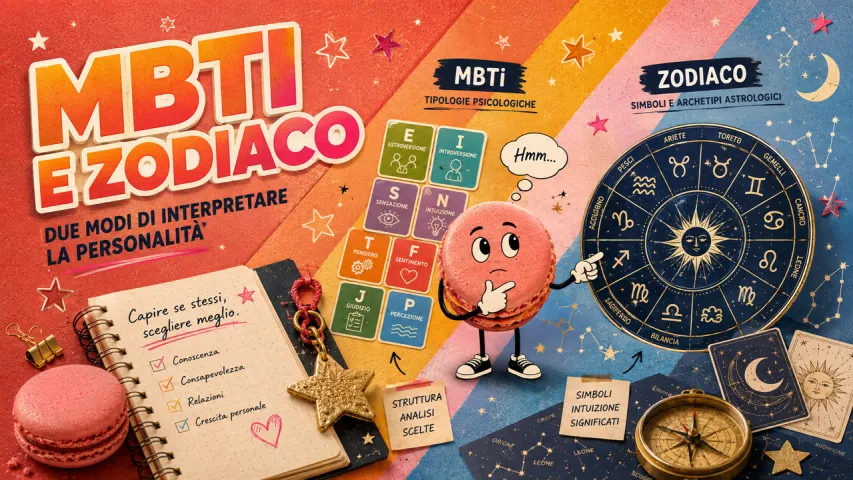
The Myers & Briggs Foundation’s current framework overview lists four preference pairs:
- Extraversion (E) or Introversion (I)
- Sensing (S) or Intuition (N)
- Thinking (T) or Feeling (F)
- Judging (J) or Perceiving (P)
One letter from each pair forms a four-letter code, producing 16 combinations. X is not in those official pairs. An “MBTI XNXJ test” may use X for uncertainty or its own notation, but XNXJ is not one of the 16 official codes.
This is a terminology boundary, not a verdict on the framework’s scientific quality. That separate question belongs in the MBTI accuracy guide, not in a definition of XNXJ.

When the Grouping Use Is Helpful
Discussing Shared N and J Patterns Without Claiming One Type
The grouping use is efficient when the subject is all four N/J-coded combinations. A tag, filter, or prompt can use xNxJ instead of repeating every code.
The shorthand only holds two positions constant. It does not prove that the four types share one personality, motive, or outcome. Replace XNXJ with “these four possible codes.” If the sentence stops making sense, the writer may be treating a group as one xnxj personality type.
When the Uncertain Self-Label Is Helpful
Leaving Room for Mixed or Changing Answers
The self-label can be honest when answers vary by context, wording, language, or recent experience. Rather than finish a profile by guessing, mark the unsettled positions and keep observing.
Be specific: “I currently use XNXJ because my first- and third-position answers vary” names what is unresolved and leaves room for revision.
Compare Four Possible Types Without Guessing
Look for Repeated Choices Across Similar Situations
Do not settle the code from one vivid event. Compare similar situations across time—for example, several planning conversations rather than a meeting and a quiet weekend. Record what happened, what you chose, and what followed.
Look for repeated choices and whether they felt workable, not a match with type stereotypes.
Keep Contradictory Examples Instead of Forcing a Match
Contradictions are useful. If you wanted discussion in one planning session but written time in another, keep both. Stakes, familiarity, energy, or language may have changed the choice.
A contradiction does not prove a letter changed or invalidate the earlier observation. It marks a condition worth noticing. Erasing exceptions only makes notes confirm the label you wanted.
Turn an Uncertain Label Into a Reflection Log
Record Context, Choice, and Outcome
Use a small uncertainty ledger instead of a list of type descriptions:
The example represents no MBTI letter; it only shows the method. Add the date and language or questionnaire version when relevant. Several rows may reveal a pattern—or show that it remains mixed.
Review Patterns Without Letting AI Assign a Type
AI can organize user-entered notes, but it should not assign a type, remove awkward examples, or turn a summary into an assessment. Review with four questions:
- What choices repeated in comparable contexts?
- Which conditions appeared when the choice changed?
- What evidence does not fit the emerging story?
- Which parts are still unknown?
If you save the ledger in Macaron or another tool, verify its current storage, editing, export, and deletion controls. Keep your corrections authoritative when an AI summary flattens a contradiction.
Limits of the XNXJ Shorthand
It Does Not Predict Ability, Compatibility, or Mental Health
XNXJ cannot reveal ability, compatibility, work or school performance, or mental health. Even official MBTI guidance describes type as preference rather than ability or character. Informal shorthand is no basis for prediction.
Use XNXJ to clarify notation or preserve an open question. Do not use it for hiring, diagnosis, educational decisions, relationship screening, or claims about what a person can become.

FAQ
Can XNXJ Be Used in a Dating or Work Profile?
Yes, but label it informal and uncertain. Disclosure is optional, and XNXJ should not imply romantic compatibility, teamwork, or performance. “XNXJ for now; two letters still open” is clearer than presenting an official result.
What If a Friend Labels Me XNXJ Without Asking?
Ask them to stop, remove it, or use your wording. Group discussion is not permission to assess someone publicly. You may state uncertainty yourself or decline a label entirely.
Can Language Change How Online Type Questions Feel?
Yes. Translation, tone, cultural context, and familiarity can change how an item feels. Note the language, version, and context. Variation is a reason to inspect wording, not proof of a type.
Should I Delete an Old XNXJ Label After Finding a Best-Fit Type?
You can remove the label while keeping useful dated observations, or retain it as a record of uncertainty. In an app, verify current edit and deletion controls rather than assuming the data disappears everywhere.
Where Can I Report a Test That Presents XNXJ as an Official Type?
Use the test site’s help or report route, or the host platform’s current function if the site has none. Identify the exact “official” claim and page address. There is no universal route for every quiz, and the Foundation does not govern unrelated platforms.
Conclusion
MBTI XNXJ has two useful informal meanings: a group containing ENFJ, ENTJ, INFJ, and INTJ, or a self-label that keeps E/I and T/F unresolved. The surrounding sentence—not capitalization alone—tells you which meaning is intended. Official MBTI codes still use one letter from each of four preference pairs, so XNXJ is not a seventeenth type or an official assessment result.
When uncertainty is personal, keep it honest with repeated context-choice-outcome notes and visible contradictions. The shorthand can hold a question open. It cannot assign identity, predict a life outcome, or replace your judgment.
Previous Posts